Q01. What is RBAC, which is Role Based Access Control in Snowflake? A01. RBAC is a security model that restricts access to data & resources based on the roles assigned to users. … Read more ›...
800+ Java & Big Data Interview Q&As
130+ job offers to choose from as a self-taught Java & Big Data contractor for 22+ years. It pays to prepare.
Blog Archives
04a: Databricks – Spark SCD Type 1 with Merge

Prerequisite: Extends 03: Databricks – Spark SCD Type 1. What is SCD Type 1 SCD stands for Slowly Changing Dimension, and it was explained in 10 Data warehouse interview Q&As. … Read more ›...
This content is for 30-Day-Full-Access, 100-Day-Full-Access, 200-Day-Full-Access, and 365-Day-Full-Access members only.
Register
80+ Free Java FAQs
80+ Free Big Data FAQs
Already a member? Log in here
04b: Databricks – Spark SCD Type 2 with Merge

Prerequisite: … Read more ›...
This content is for 30-Day-Full-Access, 100-Day-Full-Access, 200-Day-Full-Access, and 365-Day-Full-Access members only.
Register
80+ Free Java FAQs
80+ Free Big Data FAQs
Already a member? Log in here
05: 50+ SQL scenarios based interview Q&As on N items per group
This extends 15+ SQL scenarios based interview Q&As on Nth value – part 4. This SQL scenarios based interview questions & answers focus on N items per group. These examples were done on MySQL v8.0 at www.db-fiddle.com. … Read more ›...
This content is for 30-Day-Full-Access, 100-Day-Full-Access, 200-Day-Full-Access, and 365-Day-Full-Access members only.
Register
80+ Free Java FAQs
80+ Free Big Data FAQs
Already a member? Log in here
05: Azure interview Q&As on Security
Q01. What is Azure Active Directory? A01 Azure Active Directory (i.e. AD) is a cloud-based identity and access management (i.e. IAM) solution that provides a centralised, secure, and scalable platform for managing identities, access control, … Read more ›...
This content is for 30-Day-Full-Access, 100-Day-Full-Access, 200-Day-Full-Access, and 365-Day-Full-Access members only.
Register
80+ Free Java FAQs
80+ Free Big Data FAQs
Already a member? Log in here
05: Coding Scala Way – FP concepts
Example #13: Explain the concepts
Can you explain the Scala concepts applied in the following code snippets?
|
1 2 3 4 5 6 7 8 9 10 11 12 13 14 15 16 17 18 19 20 21 22 23 24 25 26 27 28 29 30 31 32 33 34 35 36 37 38 39 40 |
package com.myapp object Test2 extends App { trait Wrapper[C[_]] { def aFunction[T,R](f: T => R): C[T] => C[R] } implicit object ListWrapper extends Wrapper[List] { //returns a function: so this is a higher order function override def aFunction[T,R](f: T => R): List[T] => List[R] = { l => println("taking T => R & returning List[T] => List[R]") l.map(f) } } // A function that returns an anonymous Object // Anonymous class Test2$$anon$1 AnyRef is like java.lang.Object private implicit def fnGenAnonymousObj[C[_], T](input: C[T]) = new { // or new AnyRef or new Object //takes a function as an arg: So, this is a higher order function def anotherFunction[R](f: T => R)(implicit wrap: Wrapper[C]): C[R] = { println("In here first.......") val aClosure: C[T] => C[R] = wrap.aFunction(f) // C[T] => C[R] val result: C[R] = aClosure(input) // pass the list to the closure result } } //val result = fnGenAnonymousObj(List(1, 2, 3)).anotherFunction {x => x + 1}(ListWrapper) // without implicits val result = List(1, 2, 3).anotherFunction {x => x + 1} println(result) //val result2 = fnGenAnonymousObj(List("Java", "Scala")).anotherFunction {x => x.length}(ListWrapper) // without implicits val result2 = List("Java", "Scala").anotherFunction {x => x.length} // with implicits println(result2) } |
Output:
|
1 2 3 4 5 6 7 8 |
In here first....... taking T => R & returning List[T] => List[R] List(2, 3, 4) In here first....... taking T => R & returning List[T] => List[R] List(4, 5) |
1. Higher Order Functions: “Line 12” is a higher order function as the function not only takes a function as an argument i.e.
…
05: Databricks interview questions & answers – parquet data vs Delta lake
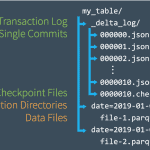
Q1. How will you convert parquet data to data lake in Databricks? A1. A parquet data will have a list of *.snappy.parquet files under each partition like year=2023, month=02, day-25, etc.
|
1 2 3 4 5 |
%sql CONVERT TO DELTA parquet.`abfss://mycontainer@mystorageaccount.dfs.core.windows.net/user_detail` PARTITIONED BY (year STRING, month STRING, day STRING) |
|
1 2 3 4 5 6 |
%python from delta.tables import * deltaTable = DeltaTable.convertToDelta(spark, "parquet.`abfss://mycontainer@mystorageaccount.dfs.core.windows.net/user_detail`", "year STRING, month STRING, day STRING") |
Q2. … Read more ›...
This content is for 30-Day-Full-Access, 100-Day-Full-Access, 200-Day-Full-Access, and 365-Day-Full-Access members only.
Register
80+ Free Java FAQs
80+ Free Big Data FAQs
Already a member? Log in here
05: ETL & ELT architecture interview Q&As

Q1. What is an ETL process? A1. ETL is a architectural style, and it stands for Extract, Transform and Load. Extract does the process of reading data from an input data source like file, database, etc. … Read more ›...
This content is for 30-Day-Full-Access, 100-Day-Full-Access, 200-Day-Full-Access, and 365-Day-Full-Access members only.
Register
80+ Free Java FAQs
80+ Free Big Data FAQs
Already a member? Log in here
05: Linear regression outputs, null hypothesis, t-test & p-value interview Q&As

Q1. How do you produce & interpret Linear Regression output? A1. Scatter plots can only detect obvious relationships between variables by looking at the graph, but we can use statistics to comment about the variable relationships as outlined below. The link 11A: Databricks – Spark ML – Pandas Dataframe &...
This content is for 30-Day-Full-Access, 100-Day-Full-Access, 200-Day-Full-Access, and 365-Day-Full-Access members only.
Register
80+ Free Java FAQs
80+ Free Big Data FAQs
Already a member? Log in here
05: Pyspark read from a file & add new columns interview Q&As with tutorial
This extends Pyspark with schema & a simple join of two data frames example.
Q08: How would you read csv data into a spark Dataframe?
A08: Here is the tutorial step by step that reads employee.csv file into the Dataframe.
…
05: Python debugging tutorial
Q. How would you go about debugging Python code? A. Firstly, import pdb
|
1 2 |
import pdb |
Secondly, use “pdb.set_trace()” where ever you want the execution to pause as shown below with “addition.py” file. … Read more ›...
This content is for 30-Day-Full-Access, 100-Day-Full-Access, 200-Day-Full-Access, and 365-Day-Full-Access members only.
Register
80+ Free Java FAQs
80+ Free Big Data FAQs
Already a member? Log in here
05: Q13 – Q18 Scala FP combinators interview questions & answers
Q13. What are the different approaches in Scala to solve the following task?
Given numbers 1 to 6, and you need to extract out the odd numbers and double them, and finally print the result.
A13. There are 3 ways to solve the problem.
…
05: Q27 – Q32 Scala idioms Q&As on Option-Some-None, Try-Success-Failure and Either-Left-Right
Java has idioms like Try-Catch-Finally, Scala has idioms like 1) “Option-Some-None”, 2) Either-Left-Right 3) Try-Success-Failure. Q27. How does Scala try to solve the problem of getting rid of null values & the “NullPointerException”? A27. Scala provides its own type for representing optional values with “Option[A]”, … Read more ›...
This content is for 30-Day-Full-Access, 100-Day-Full-Access, 200-Day-Full-Access, and 365-Day-Full-Access members only.
Register
80+ Free Java FAQs
80+ Free Big Data FAQs
Already a member? Log in here
300+ Java Interview Questions - FAQs
10+ Companion Techs Interview Q&As
300+ Big Data Interview Questions - FAQs
16+ Java Tech Key Areas Interview Q&As
Your Career Tips to go places
Tutorials on Java & Big Data
300+ Java Interview Questions Answered
“
I have a good news, I got job offer. I like to share with you from my bottom of my heart feeling thankful to you.
Jithendra
via LinkedIn
Disclaimer
The contents in this Java-Success are copyrighted and from EmpoweringTech pty ltd. The EmpoweringTech pty ltd has the right to correct or enhance the current content without any prior notice. These are general advice only, and one needs to take his/her own circumstances into consideration. The EmpoweringTech pty ltd will not be held liable for any damages caused or alleged to be caused either directly or indirectly by these materials and resources. Any trademarked names or labels used in this blog remain the property of their respective trademark owners. Links to external sites do not imply endorsement of the linked-to sites. Privacy Policy
Responsive WordPress Theme
powered by
CyberChimps
Top
Scroll Up