1. Why do you want to convert arrays to lists? 1. Arrays don’t play well with generics. 2. Arrays are of fixed size, and if you want to add or insert more elements then a list serves that purpose. 3. … Read more ›...
800+ Java & Big Data Interview Q&As
130+ job offers to choose from as a self-taught Java & Big Data contractor for 22+ years. It pays to prepare.
Blog Archives
Convert Java Date/Time to String & String back to Date/Time
#1. Why convert a Date to String & a String back to Date
(a) Convert a String input from say a file date, so that you can perform operations like
1) Adding 5 days to the date.
2) Comparing a date like before,
…
Converting a BST Tree to a List in Java
This is the reverse of Converting an Array/List to BST in Java. It is a very common task to convert a collection type A to B as a developer. More examples to practice: Converting from A to B There are 3 ways to traverse a tree to flatten it to...
This content is for 30-Day-Full-Access, 100-Day-Full-Access, 200-Day-Full-Access, and 365-Day-Full-Access members only.
Register
80+ Free Java FAQs
80+ Free Big Data FAQs
Already a member? Log in here
Converting an Array/List to BST in Java
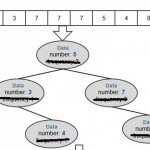
Q. What is a BST? A. BST stands for Binary Search Tree, sometimes called ordered or sorted binary trees. This is a type of data structures that store “items” such as numbers, names etc in memory. A BST allows fast lookup, addition and removal of items, … Read more ›...
This content is for 30-Day-Full-Access, 100-Day-Full-Access, 200-Day-Full-Access, and 365-Day-Full-Access members only.
Register
80+ Free Java FAQs
80+ Free Big Data FAQs
Already a member? Log in here
Converting String to Amount and Amount to String
#1. Does Java have a “Money” class? No. This will change in Java 9 with the “Money API”. JSR 354 defines a new Java API for working with Money and Currencies. #2. What are the 2 potential pitfalls in working with money? … Read more ›...
This content is for 30-Day-Full-Access, 100-Day-Full-Access, 200-Day-Full-Access, and 365-Day-Full-Access members only.
Register
80+ Free Java FAQs
80+ Free Big Data FAQs
Already a member? Log in here
Event sourcing & CQRS interview Q&As

Most feasible way to handle consistency across microservices is via eventual consistency. This model doesn’t enforce distributed ACID transactions across microservices. Event sourcing is an event-centric approach to business logic design and persistence. It favours to use some mechanisms of ensuring that the system would be eventually consistent at some...
This content is for 30-Day-Full-Access, 100-Day-Full-Access, 200-Day-Full-Access, and 365-Day-Full-Access members only.
Register
80+ Free Java FAQs
80+ Free Big Data FAQs
Already a member? Log in here
Fibonacci number

Q1. Can you write a function to determine the nth Fibonacci number? The Fibonacci numbers under 2000 are : 0, 1, 1, 2, 3, 5, 8, 13, 21, 34, 55, 89, 144, 233, 377, 610, 987, 1597. Where the zeroth number being 0, first number being 1, … Read more...
This content is for 30-Day-Full-Access, 100-Day-Full-Access, 200-Day-Full-Access, and 365-Day-Full-Access members only.
Register
80+ Free Java FAQs
80+ Free Big Data FAQs
Already a member? Log in here
Fibonacci number with caching and Java 8 FP
Complimenting Fibonacci number coding – iterative and recursive approach, we can improve performance by caching. If you run this
|
1 2 3 4 5 6 7 8 9 10 11 12 13 14 15 16 17 |
public class RecursiveFibonacci { public int fibonacci(int n) { if (n == 0 || n == 1) return n; System.out.println("evaluating fibonacci(" + n + ")"); return fibonacci(n - 2) + fibonacci(n - 1); } public static void main(String[] args) { int nThfibonacciNo = new RecursiveFibonacci().fibonacci(5); System.out.println(nThfibonacciNo); } } |
Output
|
1 2 3 4 5 6 7 8 9 |
evaluating fibonacci(5) evaluating fibonacci(3) evaluating fibonacci(2) evaluating fibonacci(4) evaluating fibonacci(2) evaluating fibonacci(3) evaluating fibonacci(2) 5 |
and you can see “fibonacci(3)” is repeated 2 times, “fibonacci(2)” is repeated 3 times, and so on. If you pick a larger number like 21, … Read more...
This content is for 30-Day-Full-Access, 100-Day-Full-Access, 200-Day-Full-Access, and 365-Day-Full-Access members only.
Register
80+ Free Java FAQs
80+ Free Big Data FAQs
Already a member? Log in here
Find 2 numbers from an array that add up to the target

Q1. Given an array of integers, find two numbers such that they add up to a specific target number? For example, Given numbers: {2, 3, 8, 7, 5} Target number: 9 Result: 2 and 7 A1. Solution 1: Store processed numbers in a set. … Read more ›...
This content is for 30-Day-Full-Access, 100-Day-Full-Access, 200-Day-Full-Access, and 365-Day-Full-Access members only.
Register
80+ Free Java FAQs
80+ Free Big Data FAQs
Already a member? Log in here
Find middle element of a LinkedList in one pass Java example

The SinglyLinkedList was created in the post “LinkedList creating from scratch in Java“. This extends “SinglyLinkedList” post. Q. How to find the middle node of a linked list in a single pass? A.
|
1 2 3 4 5 6 7 8 9 10 11 12 13 14 15 16 17 18 19 20 21 22 23 24 25 26 27 28 29 30 31 32 33 34 35 36 37 38 39 |
package linked.list; public class LinkedListTest { public static void main(String args[]) { SinglyLinkedList<Integer> linkedList = new SinglyLinkedList<Integer>(); linkedList.add(1); linkedList.add(2); linkedList.add(3); printMiddleNodeInsinglePass(linkedList); } public static void printMiddleNodeInsinglePass(SinglyLinkedList<Integer> linkedList) { Node<Integer> current = linkedList.getHead(); int length = 0; Node<Integer> middle = linkedList.getHead(); //Loop until last element is reached while (current.getNext() != null) { length++; if (length % 2 == 0) { middle = middle.getNext(); } current = current.getNext(); } if (length % 2 == 1) { middle = middle.getNext(); } System.out.println("length of SinglyLinkedList: " + (length+1)); System.out.println("middle element of SinglyLinkedList : " + middle); } } |
Output:
|
1 2 3 |
length of SinglyLinkedList: 3 middle element of SinglyLinkedList : data=2, next=data=3, next=null |
… Read more ›...
This content is for 30-Day-Full-Access, 100-Day-Full-Access, 200-Day-Full-Access, and 365-Day-Full-Access members only.
Register
80+ Free Java FAQs
80+ Free Big Data FAQs
Already a member? Log in here
Find pair of numbers with a given sum in Java
Q. Write a method which takes the parameters (int[ ] inputNumbers, int sum) and checks input to find the pair of integer values which totals to the sum. If found returns true, else returns false? Considerations: Should it work for negative integers? … Read more ›...
This content is for 30-Day-Full-Access, 100-Day-Full-Access, 200-Day-Full-Access, and 365-Day-Full-Access members only.
Register
80+ Free Java FAQs
80+ Free Big Data FAQs
Already a member? Log in here
Find the first non repeated character in a given string input
Firstly, understand the problem, and write down any considerations & assumptions. Next write pseudocode if that helps. Considerations 1) Pre-codnition check for null or empty input. 2) Loop through the input string, and store each “character” as a key in a map with the value being the “character count”. …...
This content is for 30-Day-Full-Access, 100-Day-Full-Access, 200-Day-Full-Access, and 365-Day-Full-Access members only.
Register
80+ Free Java FAQs
80+ Free Big Data FAQs
Already a member? Log in here
Finding the missing numbers Java example

Q. Can you write code to identify missing numbers in a given array of numbers?
Solution 1: Assuming that the given numbers are in order
|
1 2 3 4 5 6 7 8 9 10 11 12 13 14 15 16 17 18 19 20 21 22 23 24 25 26 27 28 29 30 31 32 33 34 35 36 37 38 39 40 41 42 43 44 45 46 47 48 49 50 51 52 53 54 55 56 57 58 59 |
public class MissingNumber { public static void main(String[] args) { int numbers[] = { 2, 3, 4, 6, 7, 8, 9, 10, 11, 12, 13, 14, 15, 18 }; new MissingNumber().findMissingNumbers(numbers, 0, 20); } private void findMissingNumbers(int[] input, int first, int last) { printMissingNumbersFront(input, first); printMissingNumbersInTheMiddle(input, last); printMissingNumbersBack(input, last); } /** * before 2 * @param input * @param first */ private void printMissingNumbersFront(int[] input, int first) { //0 and 1 are less than 2 as per the above input for (int i = first; i < input[0]; i++) { System.out.println(i); } } /** * after 18 * @param input * @param last */ private void printMissingNumbersBack(int[] input, int last) { // 1 + the last element value is 19. 19 to 20 are less than or equal to the last value of 20 for (int i = 1 + input[input.length - 1]; i <= last; i++) { System.out.println(i); } } /** * between 2 and 18 * @param input * @param last */ private void printMissingNumbersInTheMiddle(int[] input, int last) { //for a given index i, index [i-1]+1 should be equal if present. for (int i = 1; i < input.length; i++) { //e.g. for input[1] = 3, j=1+2 //input[2] = 4, j=1+3 //input[3] = 6, j=4+1, Oops 5 is less than 6 so print //input[4] = 7, j=6+1 //if index[i] < index[i-1] + 1, then number index[i-1] + 1 is missing for (int j = 1+input[i-1]; j < input[i]; j++) { System.out.println(j); } } } } |
Output:
|
1 2 3 4 5 6 7 |
0 1 5 16 17 19 20 |
The above solution assumes that the numbers are in order (i.e.
…
300+ Java Interview Questions - FAQs
10+ Companion Techs Interview Q&As
300+ Big Data Interview Questions - FAQs
16+ Java Tech Key Areas Interview Q&As
Your Career Tips to go places
Tutorials on Java & Big Data
300+ Java Interview Questions Answered
“
I have a good news, I got job offer. I like to share with you from my bottom of my heart feeling thankful to you.
Jithendra
via LinkedIn
Disclaimer
The contents in this Java-Success are copyrighted and from EmpoweringTech pty ltd. The EmpoweringTech pty ltd has the right to correct or enhance the current content without any prior notice. These are general advice only, and one needs to take his/her own circumstances into consideration. The EmpoweringTech pty ltd will not be held liable for any damages caused or alleged to be caused either directly or indirectly by these materials and resources. Any trademarked names or labels used in this blog remain the property of their respective trademark owners. Links to external sites do not imply endorsement of the linked-to sites. Privacy Policy
Responsive WordPress Theme
powered by
CyberChimps
Top
Scroll Up